Signs of Termites in Your Perth Home: 10 Warning Signs to Watch For
· Admin
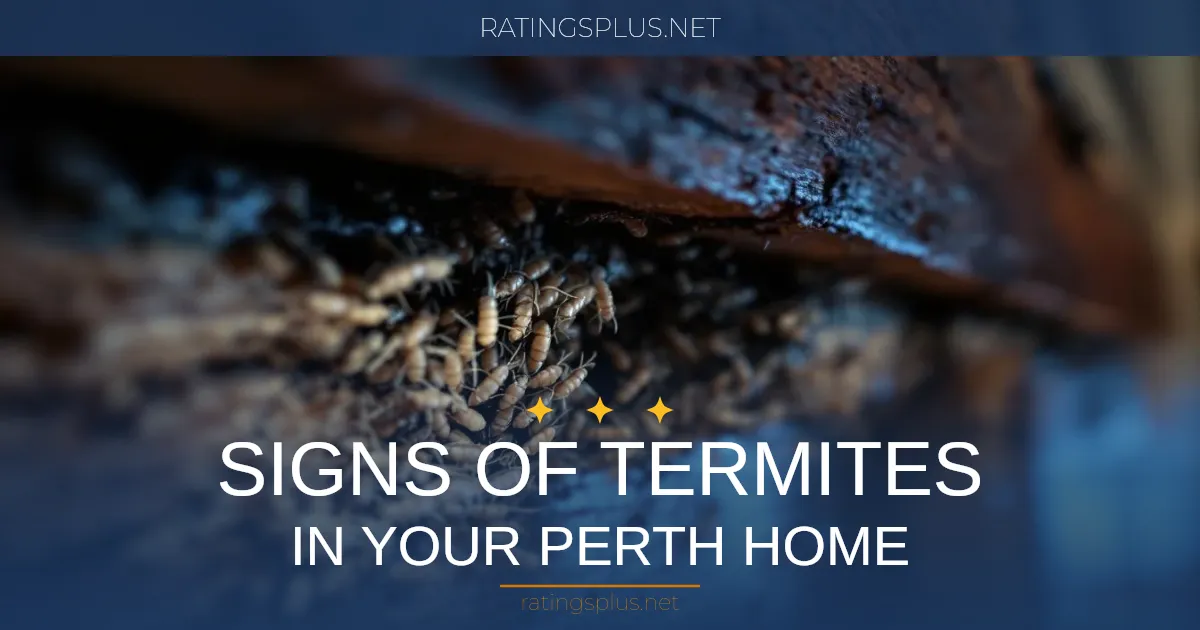
If you have noticed odd marks on skirting boards, a few tiny wings near a window, or paint that suddenly looks wrong, it is reasonable to wonder whether termites are already in the house. In Perth, that concern is not paranoid. The local mix of sandy soil, warm weather and suburban timber gives termites plenty of chances to stay hidden for longer than most owners realise.
The problem is that termites rarely announce themselves properly. They usually work in the background, inside walls, under floors, around slab edges and through concealed timber. By the time the damage looks obvious, the colony may have been active for months.
This guide covers the warning signs worth paying attention to, where termites usually hide in Perth homes, and what to do if something feels off. For the bigger treatment picture, see our Perth termite treatment guide. If cost is your next question, we also have a breakdown of termite treatment prices in Perth.
Why Perth homes stay exposed to termite activity
Perth is one of the places in Australia where termite risk is hard to brush off. Warm conditions, sandy ground and the spread of suburban housing all help subterranean termites move from soil into buildings. Add leaking taps, irrigation, garden beds against walls or older timber around the property and the risk climbs further.
One of the main structural pest species is Coptotermes acinaciformis. It stays protected from light, needs moisture, and often enters homes through spots the owner never thinks to check. That is why a house can look completely fine from the street and still have active feeding inside.
10 signs of termites Perth homeowners should take seriously
1. Mud tubes on brickwork, walls or foundations
These are one of the clearest signs. Subterranean termites build narrow mud tunnels so they can move while staying protected. You might spot them around slab edges, garage walls, retaining walls or external brickwork.
If you find them, do not assume the problem is over just because one section breaks away. The visible tube is only part of the picture.
2. Hollow-sounding timber
When timber sounds papery or empty when tapped, termites are one possible reason. They often eat from the inside out, leaving the surface looking more intact than it really is.
3. Doors or windows that start sticking
This can happen for innocent reasons too, but when a frame suddenly starts jamming without a clear explanation, termite damage is worth considering. Changes in the timber and moisture levels can affect how frames sit.
4. Bubbling paint or rippled surfaces
Paint that lifts, ripples or blisters can sometimes point to termite activity behind the surface, especially if other signs are nearby. It is easy to mistake this for a simple moisture problem.
5. Timber that feels soft, thin or crumbly
If wood gives way too easily or feels fragile where it should feel solid, something is wrong. That does not prove termites on its own, but it is not something to ignore.
6. Discarded wings near doors, windows or lights
After swarming, reproductive termites shed their wings. Small piles of matching wings indoors are a stronger warning sign than just seeing a random flying insect outside.
7. Unexplained gritty residue or droppings
Some termite activity leaves residue around timber. It will not always be obvious, but if fine debris keeps appearing around the same area, it is worth checking properly.
8. Faint clicking or rustling in walls
This is not the most common sign, but it does happen. In quiet conditions, active termites inside timber or wall voids can make faint noises.
9. Damage around skirting boards, flooring edges or built-ins
These edge areas often show trouble early. Staining, weakness, lifting or small breaks near walls can be a clue that termites are moving through concealed sections.
10. Risk signs outside the house
Sometimes the first warning is outside rather than inside. Fence posts, sleepers, tree stumps, stacked firewood, leaking irrigation and timber touching the house can all create easy paths for termites.
Where termites usually hide in Perth homes
Common hiding spots include subfloors, roof voids, wall cavities, patios, decking supports, fence lines, garages, laundry areas and slab penetrations. Any spot with timber, moisture and little disturbance deserves a closer look.
Newer homes are not immune either. Termite systems help, but landscaping changes, drainage problems and missed maintenance can still create access routes over time.
What to do if you notice one of these signs
First, do not spray insect killer into the area. That often just pushes activity elsewhere and makes inspection harder. Second, avoid pulling damaged sections apart unless there is an immediate safety issue. Third, take photos and note exactly where you found the sign.
After that, arrange a proper termite inspection. In WA, you want someone who understands local conditions and can tell the difference between a minor clue and an active infestation that needs treatment.
When subtle signs are enough to justify an inspection
A lot of homeowners wait for certainty, but that is usually a mistake. You do not need every sign on the list before calling someone. One credible sign can be enough, especially if the property has a history of termite issues, moisture problems or timber close to soil.
That is particularly true before buying a property or after plumbing leaks, landscaping changes or renovation work. The earlier termites are found, the less painful the repair bill tends to be.
FAQ
What is the most common sign of termites in Perth homes?
Mud tubes are one of the clearest warning signs, especially around slab edges, brickwork and garages. Hollow timber and discarded wings are also common clues.
Can termites be active even if I cannot see major damage?
Yes. That is very common. Visible damage often appears later than the infestation itself.
How often should Perth homeowners get a termite inspection?
Once a year is a sensible baseline for many homes, with more frequent checks worth considering on higher-risk properties.
Does home insurance cover termite damage?
Usually no. In most cases it is treated as a maintenance issue rather than an insured event.
What should I do first if I think I have termites?
Take photos, avoid spraying chemicals into the area, leave the damaged section alone, and arrange a professional inspection.
You do not need to panic if you spot a possible sign of termites in Perth, but you do need to take it seriously. Termites get expensive by staying hidden, not by making a dramatic first impression.